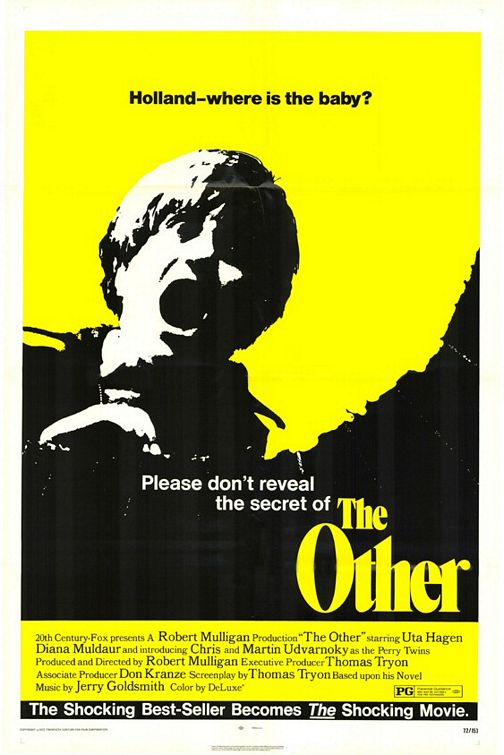
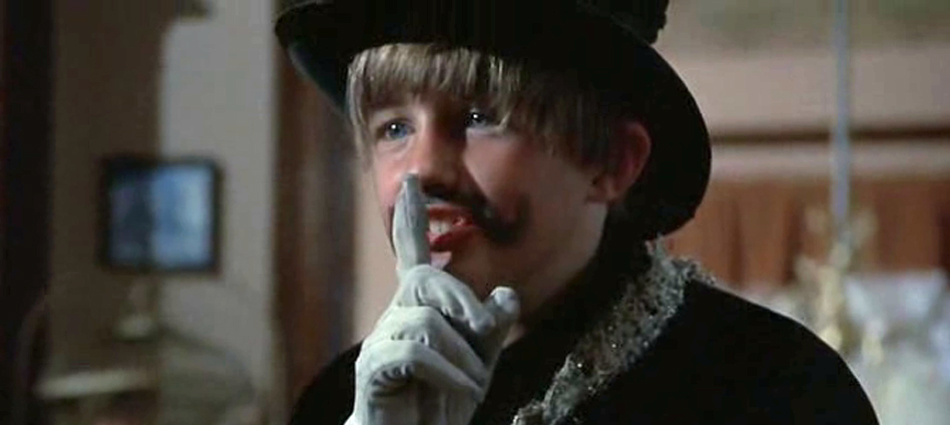
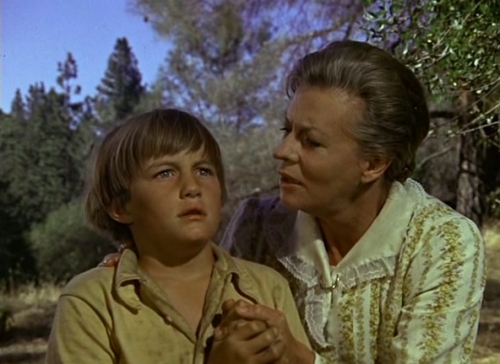
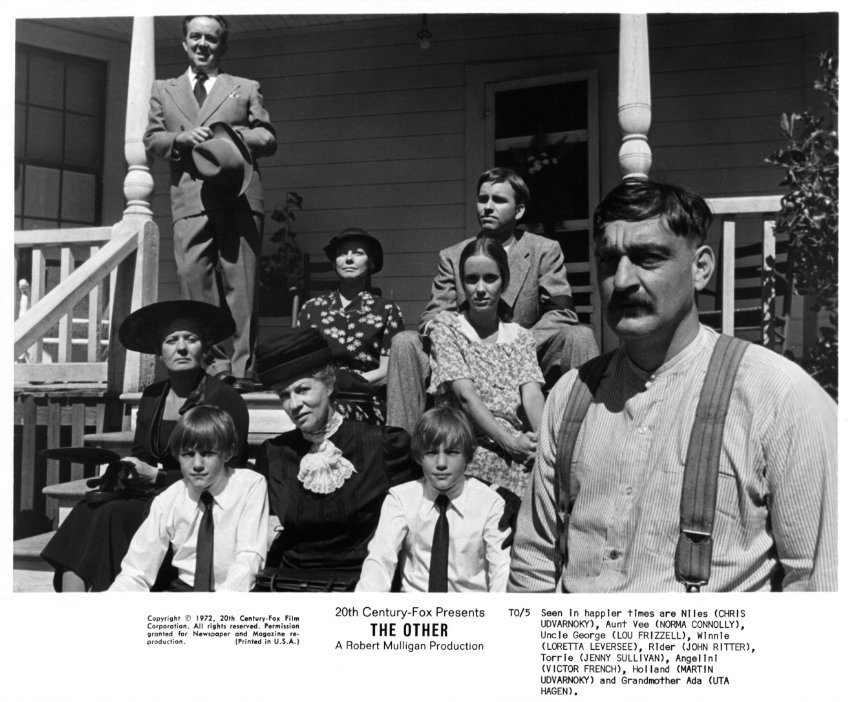
Every Halloween season I watch THE OTHER, a favorite among forgotten or unsung horror films. This is one of those movies near impossible to talk about without spoiling some secrets, and THE OTHER is all about secrets. I can safely tell you the movie takes place in 1935 New England, and concerns one summer in the life of the Perry family, particularly the twin boys Niles and Holland. Underneath the pastoral landscape of the town, lies and secrets fester … and suspicious deaths occur fairly regularly. Director Robert Mulligan also filmed TO KILL A MOCKINGBIRD, and THE OTHER can be read as the dark reverse of MOCKINGBIRD’s deeply felt nostalgia. Under the hot summer sun, behind the barns and bales of hay, down in the apple cellar, something is very, very wrong.
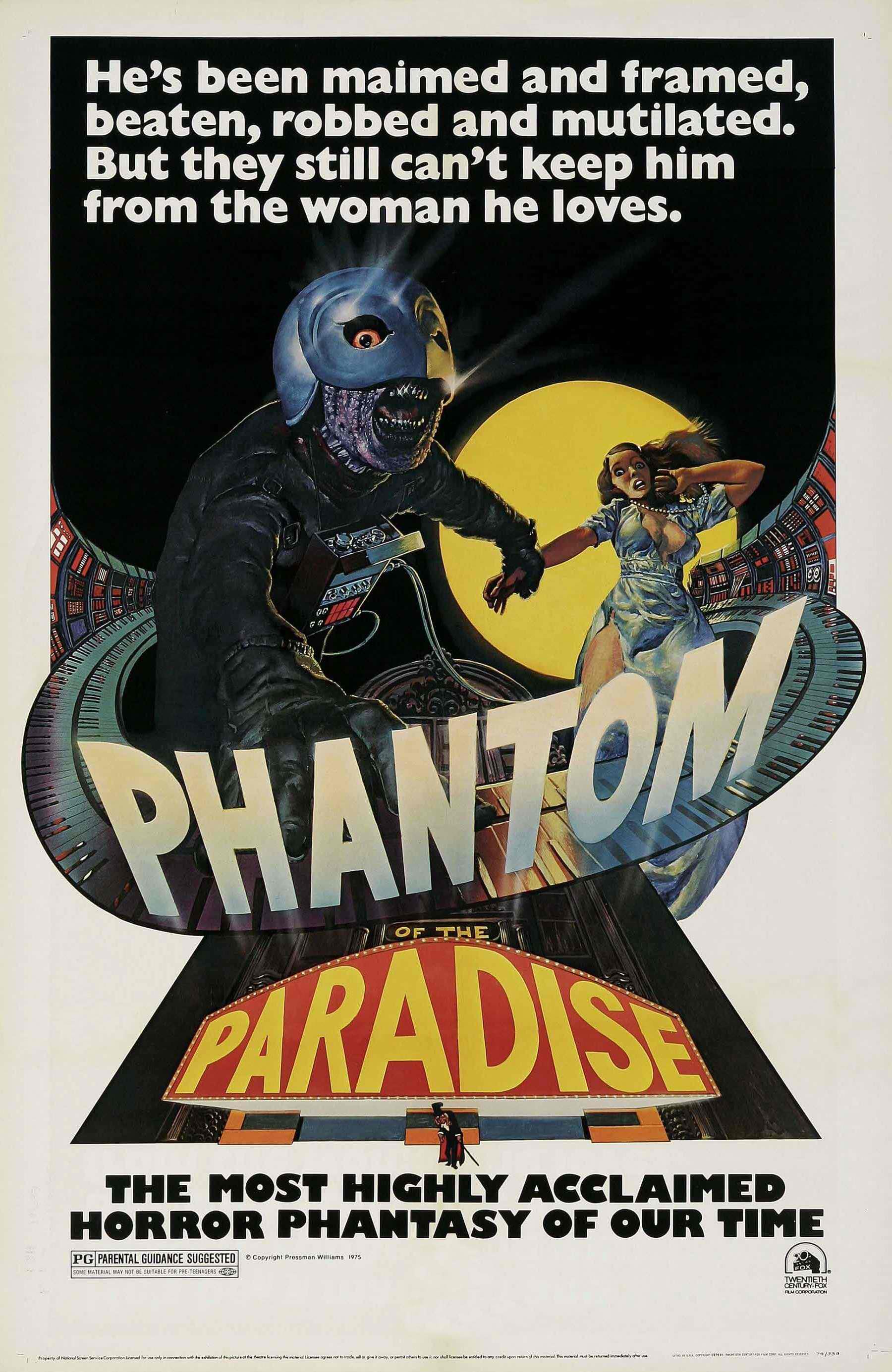
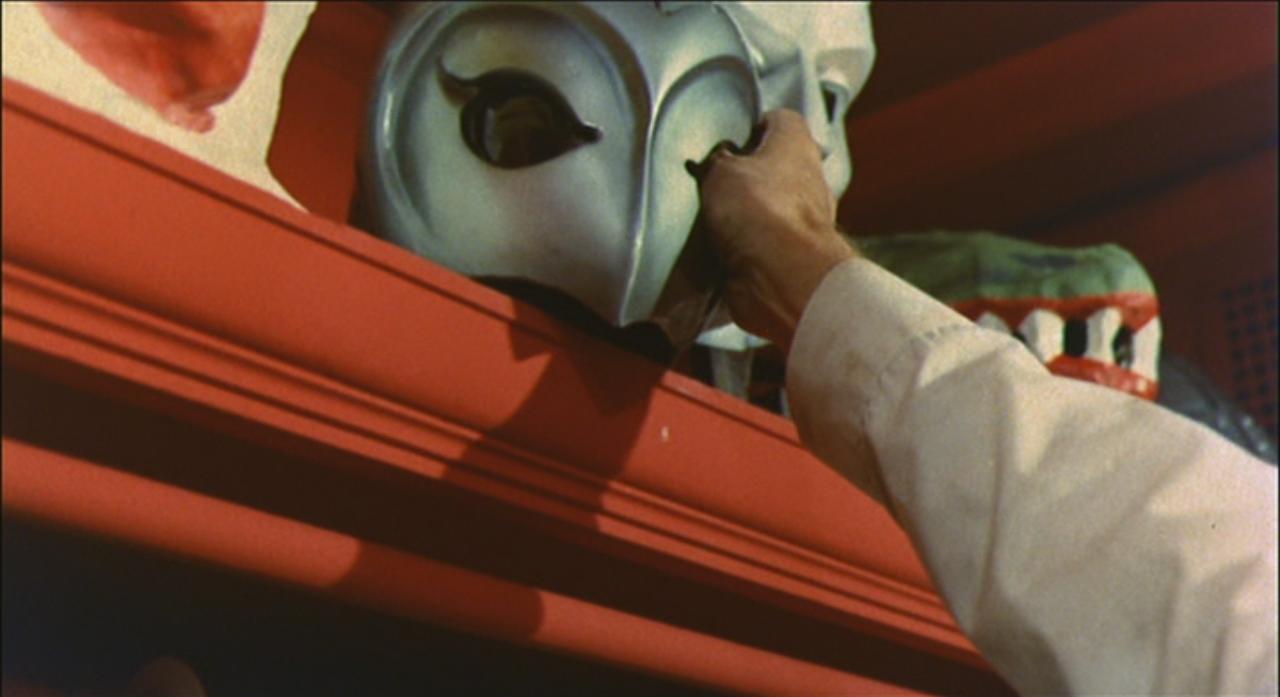
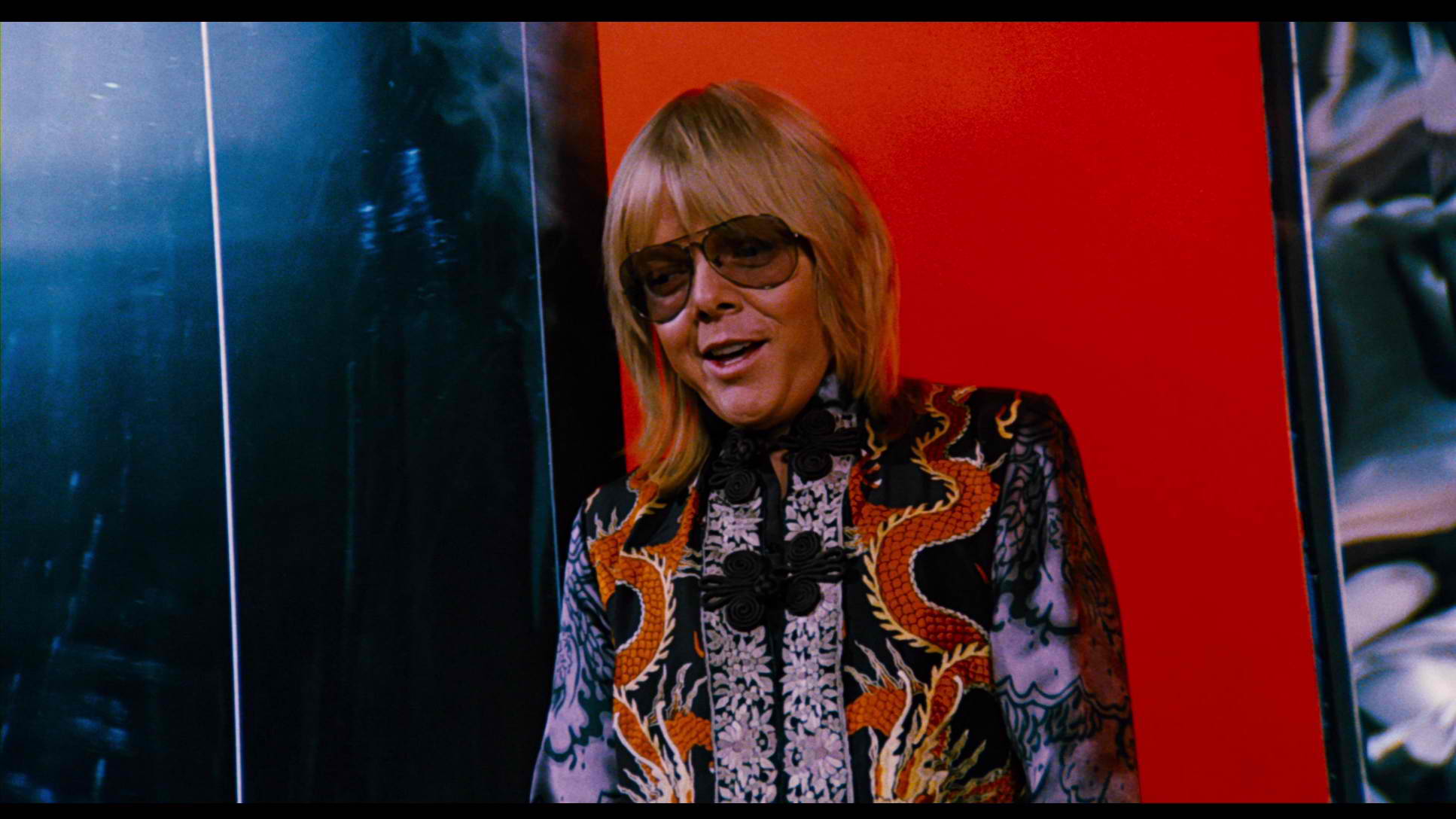
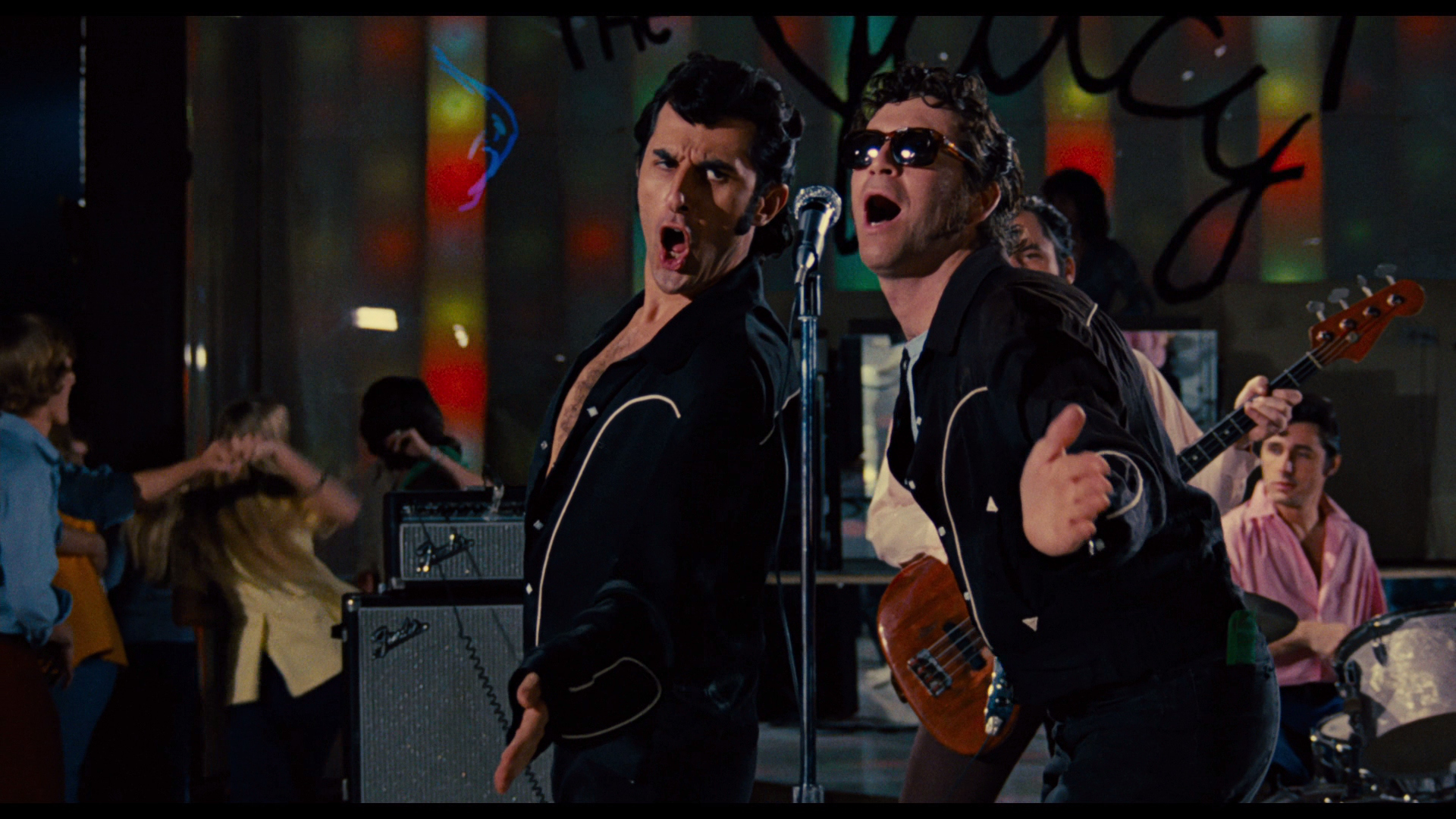
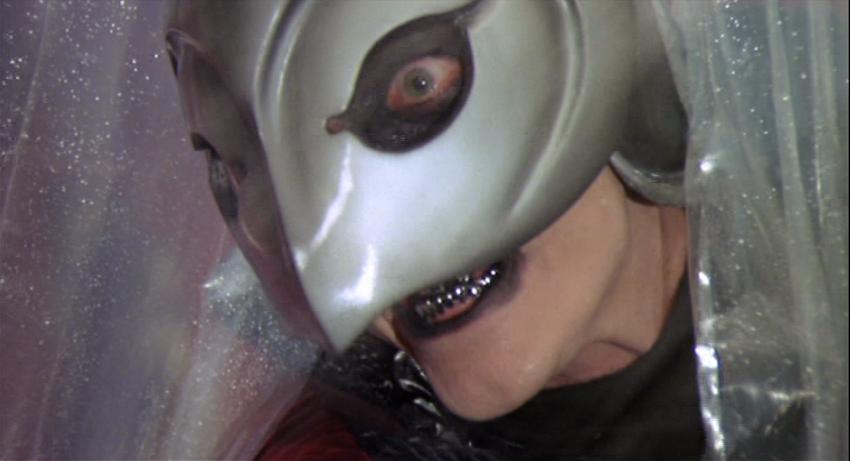
Halloween is just as much about fun as it is fright, and director Brian De Palma’s 1974 rock-and-roll musical THE PHANTOM OF THE PARADISE is a real scream. It’s THE PHANTOM OF THE OPERA set to a beat and De Palma’s visual mastery, with Dorian Gray and Faust thrown in for extra color. PHANTOM is a worthy cult film, actually a much better movie, more outrageous, than THE ROCKY HORROR PICTURE SHOW. De Palma’s special ingredient? Paul Williams — that’s right, the guy who wrote the songs “The Rainbow Connection” for Kermit the Frog and “Rainy Days and Mondays” for the Carpenters — as the Faust character, an evil record producer. Williams also wrote all the songs for the movie, including the killer glam rock tune “Life at Last”. And a bit of trivia: The set dresser for the movie was Sissy Spacek. Two years later she’d be the lead star of De Palma’s CARRIE.
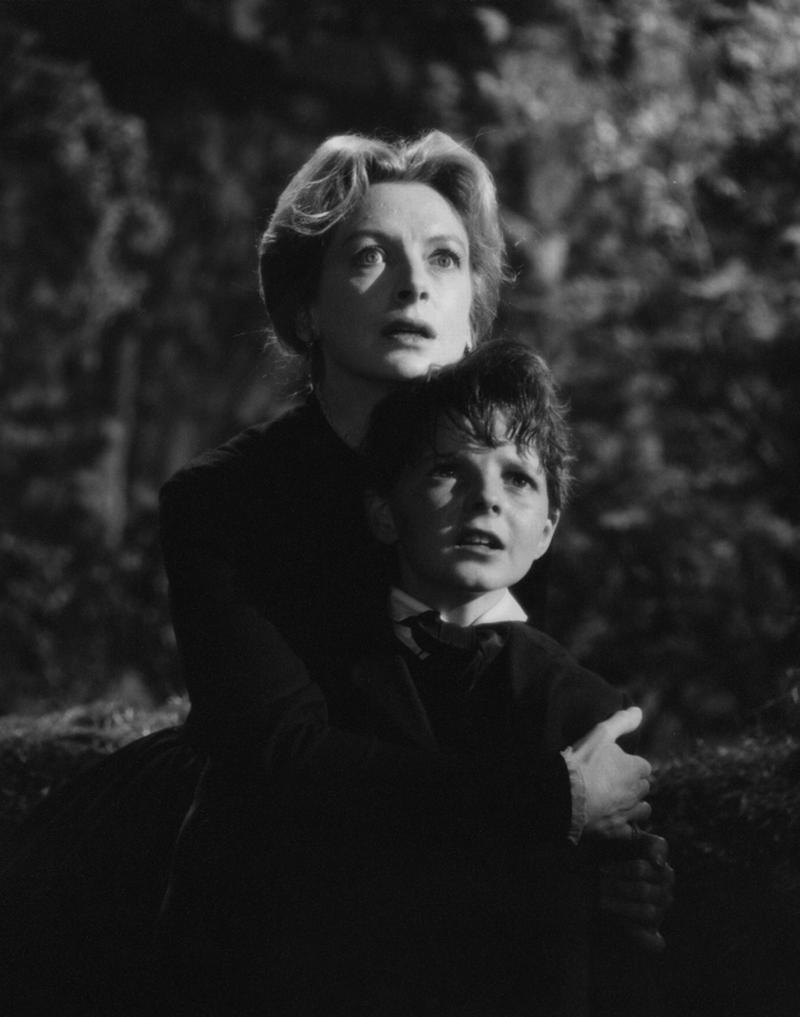
Today’s Halloween movie recommendation is a quieter brand of horror, a black-and-white supernatural and psychological thriller based on Henry James’ classic 1898 ghost story THE TURN OF THE SCREW. But before you yawn and write it off as potentially dull, there are some diabolic currents running through the 1961 adaptation THE INNOCENTS. No surprise, Truman Capote wrote the screenplay from the novel. This movie will creep up on you, wrap its cold arms around you like the chilliest mist, and you’ll find yourself thinking about it again days later. There were things you couldn’t talk about in polite society in 1898 — or even 1961, for that matter — but those things are here, just out of sight, registered in the expressions of the adult and children characters … deadly questions that are never completely asked.
From now through Halloween, I’ll post a daily movie recommendation that’ll help get you in the mood, perhaps even inspire you before all the little goblins and gremlins arrive on your doorstep.
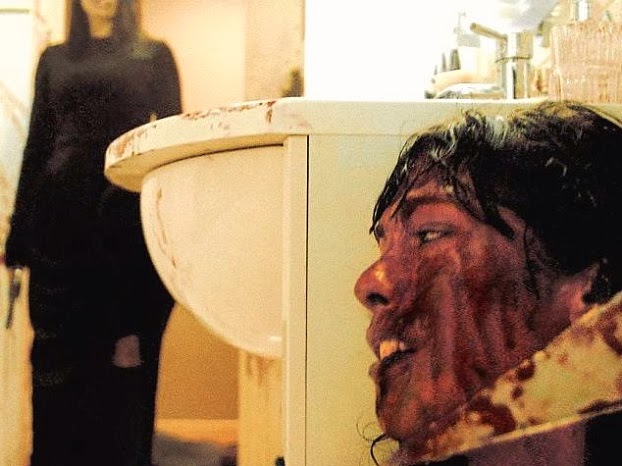
The night before labor is to be induced by her doctor, a woman goes home to rest. A stranger knocks at the door. She wants something inside. Something inside the house. Something inside the expecting mother.
INSIDE, a French movie released in the States in 2007, is the last movie that really scared the shit out of me. Everyone I’ve recommended it to has agreed. Don’t let the subtitles frighten you away … the film will take care of that. There isn’t much dialogue anyway, and you don’t need subtitles to translate screams. And there are a lot of screams. Mind the volume on your television … my neighbors looked at me very strangely for a couple days after I watched it.
This is a regular list of random things that have fueled my love affair with cinema over the years.
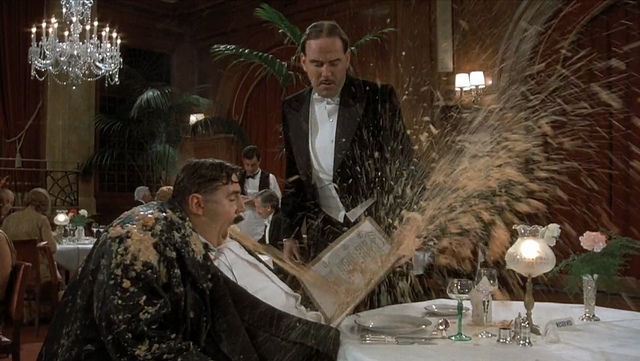
I LOVE the “Mr. Creosote” sketch in MONTY PYTHON’S THE MEANING OF LIFE. The movie’s a collection of hit-or-miss skits, not my favorite from the British comedy troupe (can never decide if that would be THE HOLY GRAIL or THE LIFE OF BRIAN) … but this skit is comic genius. Thoroughly disgusting and, in true Python fashion, preposterous and hilarious. Terry Jones (Creosote), John Cleese (maître d’) and Eric Idle (waiter) are wildly funny together.
I LOVE the evocative black-and-white photography by Robert Surtees in THE LAST PICTURE SHOW. The movie, directed in 1971 by Peter Bogdanovich from the novel by Larry McMurtry, is a coming-of-age tale set in a dying Texas town in the 1950s. Bogdanovich reportedly wanted the movie to look as if it were actually shot in the ’50s, and Surtees’ cinematography also evokes the bleak, aimless, dead-end lives of the residents of a dried-up town in Northwest Texas. Powerful imagery.
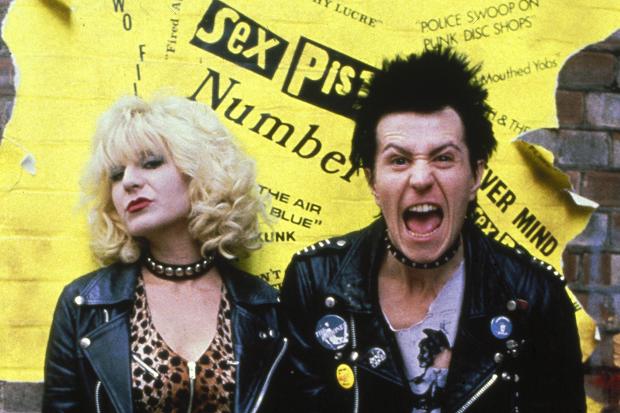
I LOVE Gary Oldman and Chloe Webb as punk rocker Sid Vicious and his foul-mouthed muse Nancy Spungen, perhaps the most damaged and doomed romantic couple that ever hooked up, in the 1986 biopic SID AND NANCY. I can’t think of two people in rock and roll lore I’d least like to have spent a few hours with in a room — Sid an inveterate junkie with an infantile lack of restraint and Nancy a shrill, obnoxious Yank always spoiling for a fight. If you don’t know how the true love story between the Sex Pistols’ bass player and his Philadelphia girlfriend ends, the movie was originally titled LOVE KILLS. From all accounts, the real Sid and Nancy were impossible to tolerate, but I’ll be damned if their tragic story, directed by Alex Cox, isn’t eventually affecting. That’s thanks to the two actors, Oldman and Webb, both at the beginning of their careers. Funny, exasperating, defiant, loud and never apologetic, they bring Sid and Nancy back to life for a few hours … you’ll want to kill them several times yourself, but you’ll also, against all reason and odds, have a hell of a good time with them
.
I LOVE the super-exciting car chases in Quentin Tarantino’s DEATH PROOF, one half of GRINDHOUSE, his tribute to the sleazy, cheap exploitation movies of the 1970s. Tarantino has claimed he feels DEATH PROOF is the worst movie he’s made, but I’m not buying it. QT staged a hell of a car chase here, a deadly battle between two movie stunt professionals, Kurt Russell as psychotic “Stuntman Mike” and Zoe Bell as, well, herself. They’re both badass, and so is the scene.
I LOVE Gary Jules’ melancholy remake of the Tears for Fears song “Mad World” over the haunting end of Richard Kelly’s 2001 brain twister DONNIE DARKO. I find it kind of funny, I find it kind of sad, the dreams in which I’m dying are the best I’ve ever had … I don’t know what inspired Kelly to write this trippy mind-fuck of a movie, but “Mad World” could certainly have been it. Went to school and I was very nervous, no one knew me, no one knew me … Curt Smith of Tears for Fears has said, “It’s very much a voyeur’s song. It’s looking out at a mad world from the eyes of a teenager.” Perfect description of the movie as well. And Gary Jules’ piano cover perfectly accompanies the DONNIE DARKO’s sad coda. Hello, teacher, tell me what’s my lesson?, look right through me, look right through me … Hits me every time.
… and the music video, created by Michel Gondry, director of ETERNAL SUNSHINE OF THE SPOTLESS MIND, fills my heart every time I watch it.
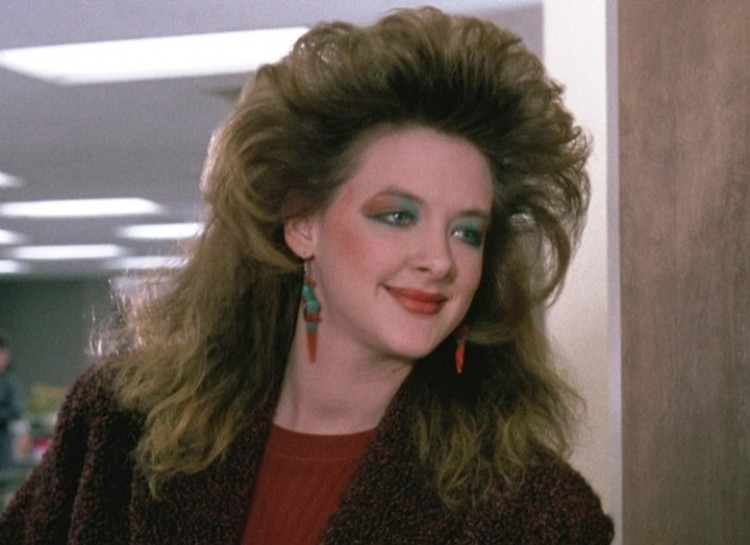
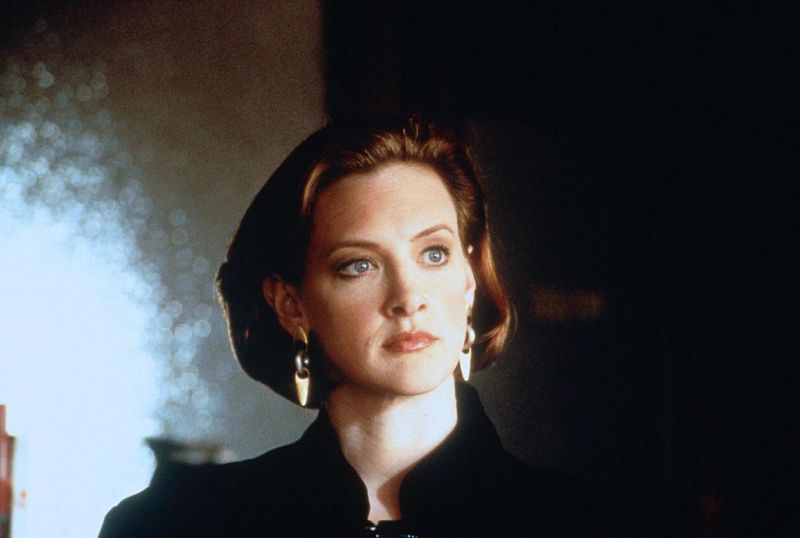
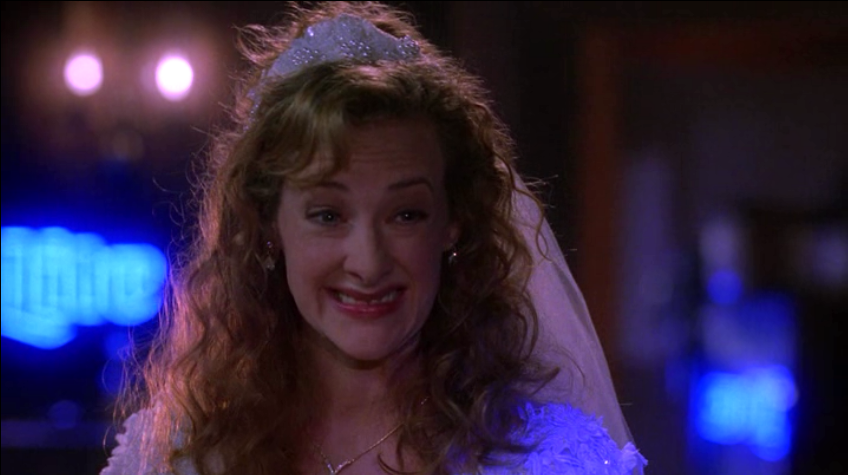
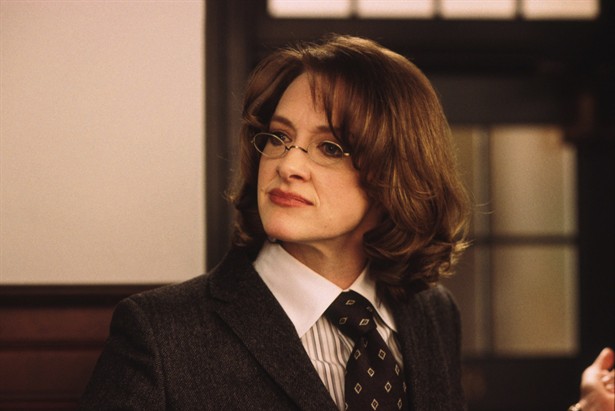
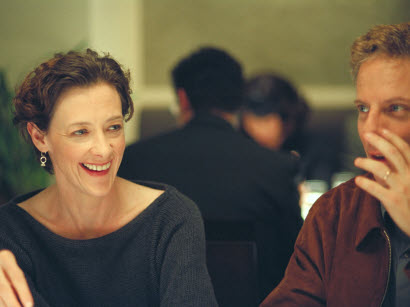
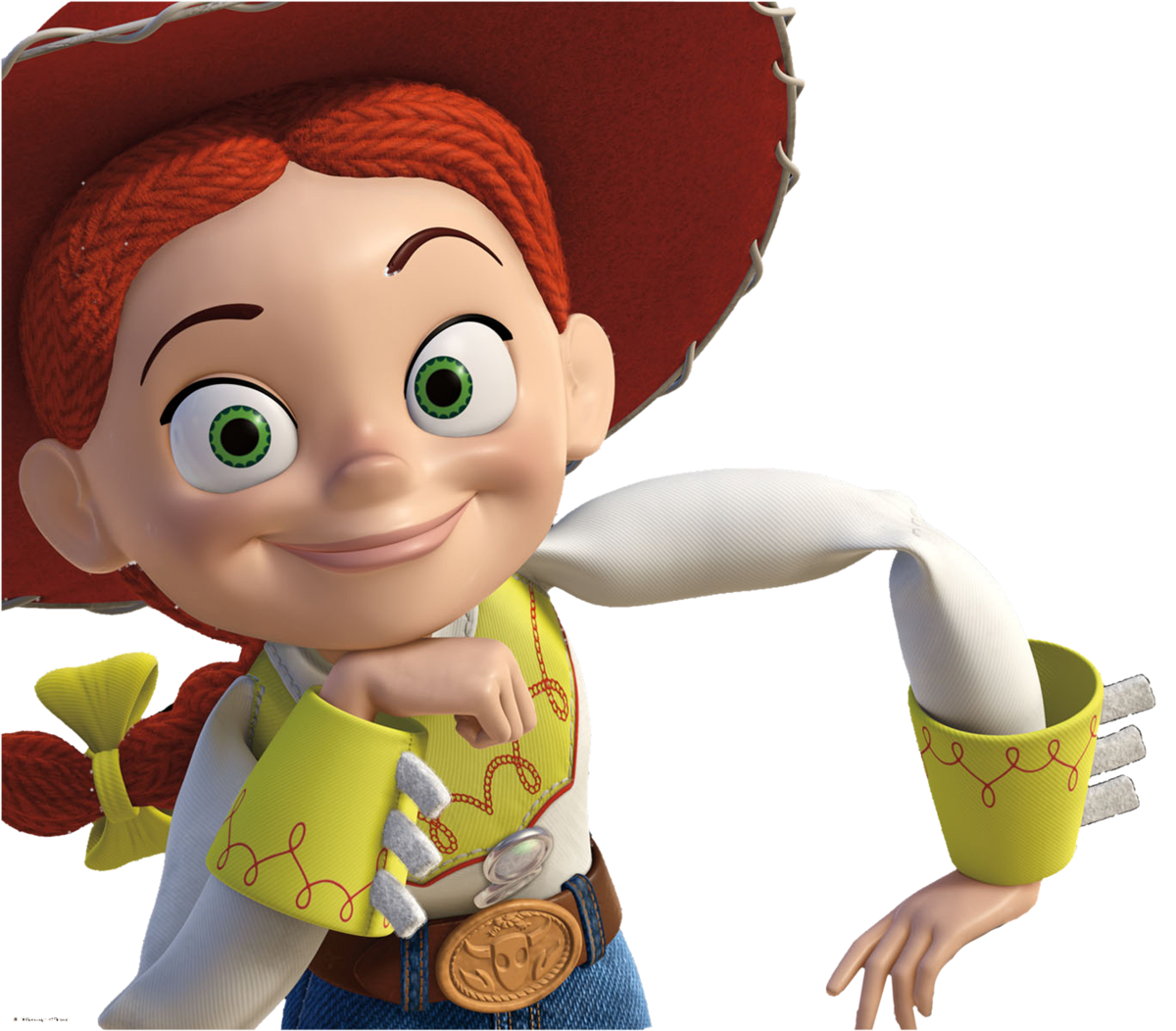
I LOVE Joan Cusack, one of the most entertaining and versatile character actresses of her generation. She may not have the traditional leading lady features of some of her peers, but Cusack has the talent to convincingly portray everything from misfits to mothers to murderers. Every movie she is in is certainly not great, but I insist that every movie she’s in is better because of her. Producers, find this woman more great roles!
SIXTEEN CANDLES (1984)
WORKING GIRL (1988)
ADDAMS FAMILY VALUES (1993)
GROSSE POINTE BLANK (1997)
IN & OUT (1997)
ARLINGTON ROAD (1999)
SCHOOL OF ROCK (2003)
FRIENDS WITH MONEY (2006)
TOY STORY 2 (1999) and TOY STORY 3 (2010)
I LOVE the score to the 1947 movie THE GHOST AND MRS. MUIR by Bernard Herrmann. This is magnificent music, dramatic and emotional, a thrilling peak for the maestro responsible for some of the best movie music ever created. Herrmann’s work here is as tempestuous as the sea crashing against the rocks and cliffs of the English seaside town … and as intensely yearning as the impossible love between the ghost of a long-dead sea captain and the young widow who moves into his once quiet cottage.
I LOVE this insane trailer for a crappy little 1968 Japanese/U.S./Italian science fiction movie. (And for crazy trivia, the groovy theme briefly heard at the end of the trailer — Green Slime! Green Slime! Green Sliiiiiiiimmme! — is a snippet of the full song written by Charles Fox, the composer who wrote Roberta Flack’s “Killing Me Softly”.)
The movie is more of the same, so … HIGHLY RECOMMENDED. And the poster is pretty damned wonderful also.
I LOVE the first Winkie’s Diner scene in David Lynch’s MULHOLLAND DRIVE. This is a deeply unsettling and endlessly fascinating movie, one that on first viewing can seem stubbornly enigmatic, even meaningless. Open your eyes and your mind, drop your defenses, allow yourself to fall into Lynch’s vision. MULHOLLAND DRIVE is a disturbing and frequently funny descent into crushed dreams, disappointments, delusion and shame, the dark side of the fantasy of Hollywood fame and fortune. This is one of my favorite moments in the film, an odd and increasingly creepy scene that seems totally unconnected to the narrative that precedes it. Don’t be fooled … this quintessential Lynchian weirdness is actually working with the narrative, commenting on things that have happened … or will soon happen … or …! Watch how the camera moves while the two men talk in the restaurant. Note how objects very subtly disappear. Why does the camera linger on the pay phone for a second when the men leave the diner. Why does the frightened man react to the entrance sign? What happens in the two later scenes set at the same diner? This dread-laden clip contains many clues to help unlock the mysteries of the movie.
It’s astonishing to remember CLOSE ENCOUNTERS OF THE THIRD KIND was only Steven Spielberg’s second theatrical film, following JAWS by two years. He was barely 30 when he made it! This movie speaks directly to me because I grew up on a steady diet of Hitchcock thrillers, mid-century science fiction movies and the Disney animated classics … just like Spielberg did. And CE3K is a loving tribute to all three of those influences. Hitchcock’s NORTH BY NORTHWEST is all over the middle section of CLOSE ENCOUNTERS, with Devil’s Tower subbing for Mount Rushmore. The song “When You Wish Upon a Star” from Disney’s PINOCCHIO floats through the movie, underlining Spielberg’s themes. And the excitement and mystery of visitors from other worlds fueled the plots of those Saturday afternoon science fiction repeats. But more than that, Spielberg’s epic made me believe in extraterrestrial life and made me believe in movies. I was 13 when my family saw CE3K at the cinema in 1977; I was dazzled, I was hooked. The term “jaw-dropping” has become a cliché, but I remember vividly the expressions of nearly everyone leaving the theatre that night — wide eyes, big smiles, one-word proclamations of “Wow!” And, like any classic movie, I’m still spellbound when I watch it, 37 years later. This is one of the movies that made me the movie fanatic I am.
This is a regular list of random things that have fueled my love affair with cinema over the years.
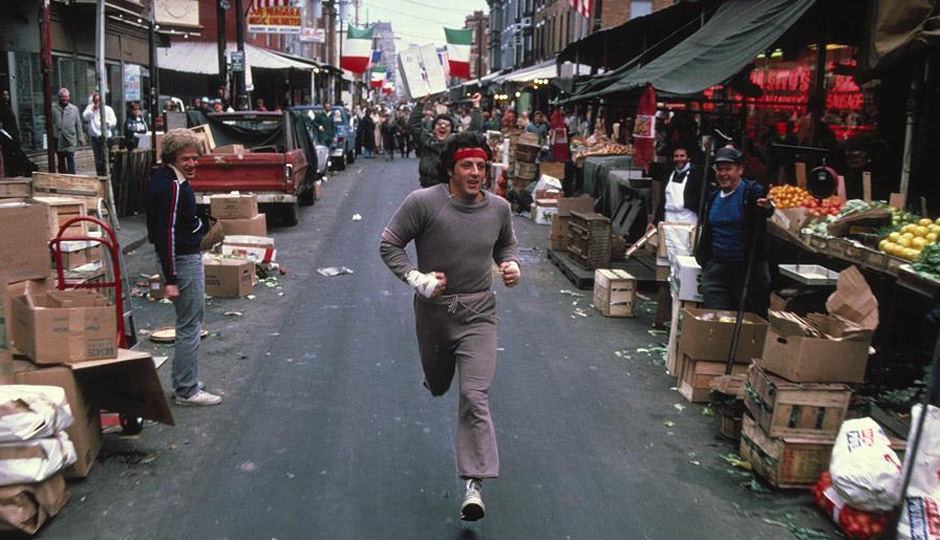
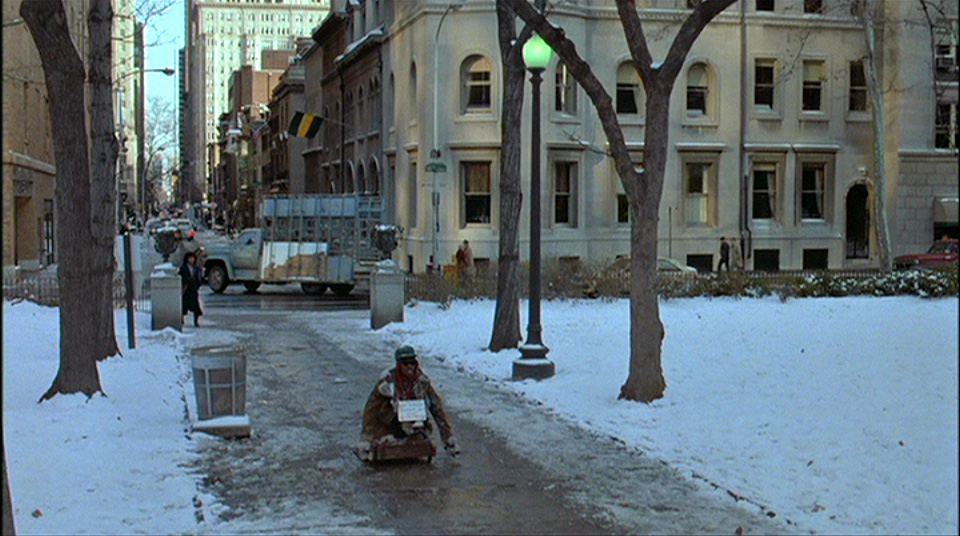
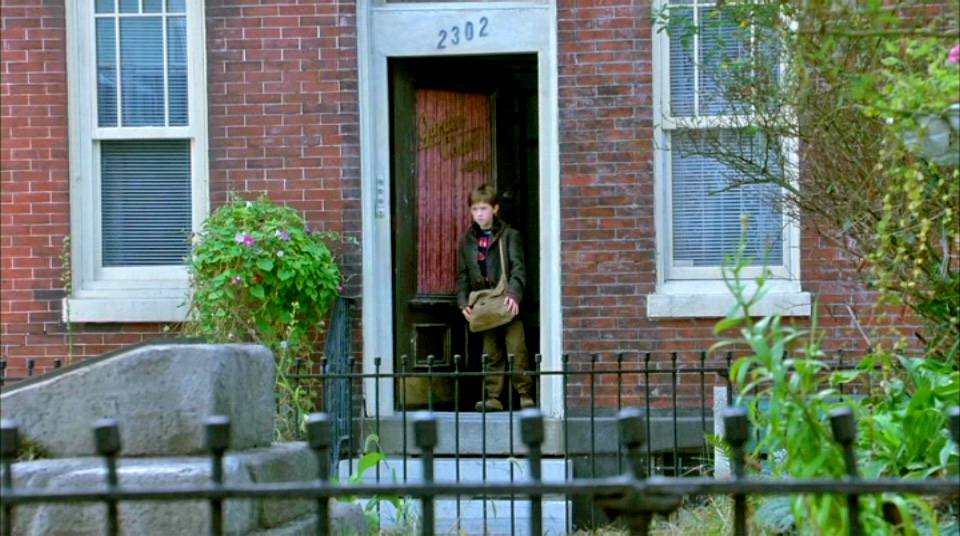
I LOVE seeing my hometown in the movies. Although it’s been three-and-a-half decades since I left Philadelphia, I love the city from afar, and seeing it on the screen always triggers mixed emotions in me — nostalgia, a bit of pride, a love of family, fleeting homesickness, relief that I’m now over 2,000 miles away.
Whether it’s the gloomy blue-collar mid-1970s neighborhood that was Sylvester Stallone’s urban gym in ROCKY,
or the socially diverse human interest map of TRADING PLACES,
or the fantastically imagined near-future dystopia of Terry Gilliam’s 12 MONKEYS,
or the quiet but very menacing haunted row homes of M. Night Shyamalan’s THE SIXTH SENSE,
or the streets and sites, both mundane and grand, photographed so mysteriously and mythically in Shyamalan’s UNBREAKABLE,
… seeing this city again on the screen reminds me that Philadelphia is an exciting, spirited and remarkably historic city, and it was an inspirational and fun place to call home the first 15 years of my life.
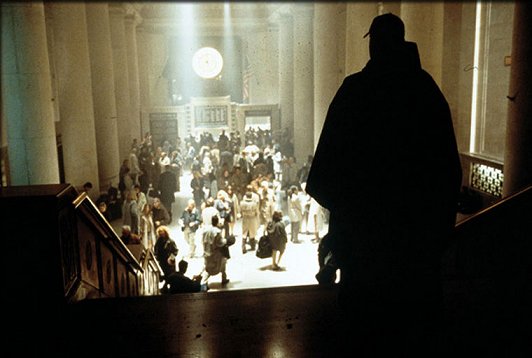
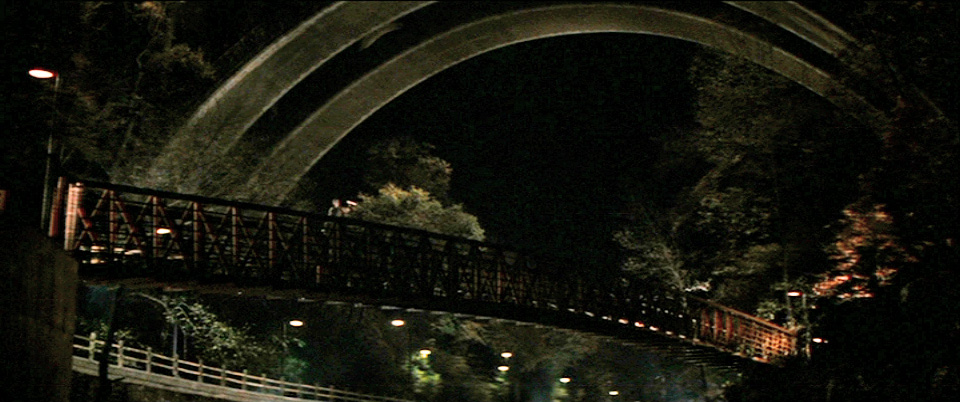
The movie with the most vibrant and beautiful shots of Philadelphia is definitely Brian De Palma’s BLOW OUT. From the patriotically decked-out tourist destination of Penn’s Landing on the Delaware River to City Hall, the nation’s largest municipal building; and through the display window of Wanamaker’s, the city’s first department store, to the marble, gold, red and cream interior of the 30th Street train station (see UNBREAKBLE photo) and the pedestrian walkway beneath the Wissahickon Bridge in Fairmount Park, BLOW OUT is an authentic tour of the City of Brotherly Love in the early ’80s.
Damn!, what is that feeling? Homesickness? I think it’ll be time for a trip back to Philly soon!
I LOVE Barbra Streisand’s film debut as Fanny Brice in the 1968 production of the musical FUNNY GIRL. Streisand played the role on Broadway from 1964-66, but producers wanted a more established Hollywood actress for the movie. Shirley MacLaine turned it down, and director William Wyler insisted on Barbra. The movie might be sketchy on biographical truth, but there’s no denying Streisand’s extraordinary, powerful intorduction to film audiences. A star was indeed born. (Streisand split the Oscar for Best Actress in a rare tie with Katharine Hepburn in THE LION IN WINTER.)
I LOVE the attack of the skeletons and sword fight in the 1963 fantasy adventure JASON AND THE ARGONAUTS. The movie was helmed by a television director, but stop motion animation genius Ray Harryhausen directed the special effects scenes, including the giant living statue Talos, the murderous winged Harpies, and the seven-headed snake creature Hydra. But the most memorable of Harryhausen’s Argonaut antagonists is the army of sword-fighting skeletons. This scene has been copied many, many times in the 50 years since, but never with the imagination, patience, sense of wonder, excitement, talent and love of craft that Harryhausen brought to all of his creations, from MIGHTY JOE YOUNG in 1949 to CLASH OF THE TITANS in 1981.
I LOVE this movie poster. EYES OF LAURA MARS will be on another of my lists soon enough, thanks to a challenge from a friend, but this striking image has been a favorite since the night in 1978 that a 14-year-old me sneaked into a theater to see the movie.
I LOVE the scene in HIGH ANXIETY in which Mel Brooks is attacked by birds. He’s poking Alfred Hitchcock in the ribs, of course … these birds don’t want to peck eyeballs, they’re just doing what birds do. HIGH ANXIETY isn’t Mel’s best movie — hello YOUNG FRANKENSTEIN, hello BLAZING SADDLES, hello THE PRODUCERS — but it is a delightfully chaotic mix of two particular favorites: 1970s Mel Brooks and Alfred Hitchcock’s entire film canon. (I also love the joke about movie music cliches: During a suspenseful car chase, Mel Brooks is jolted and confused by the sudden rush of bombastic, overwrought action movie music. An orchestra is performing in a bus that passes him in the next lane. Classic Brooks. And I just adore Cloris Leachman as sinister sex fiend Nurse Diesel.)
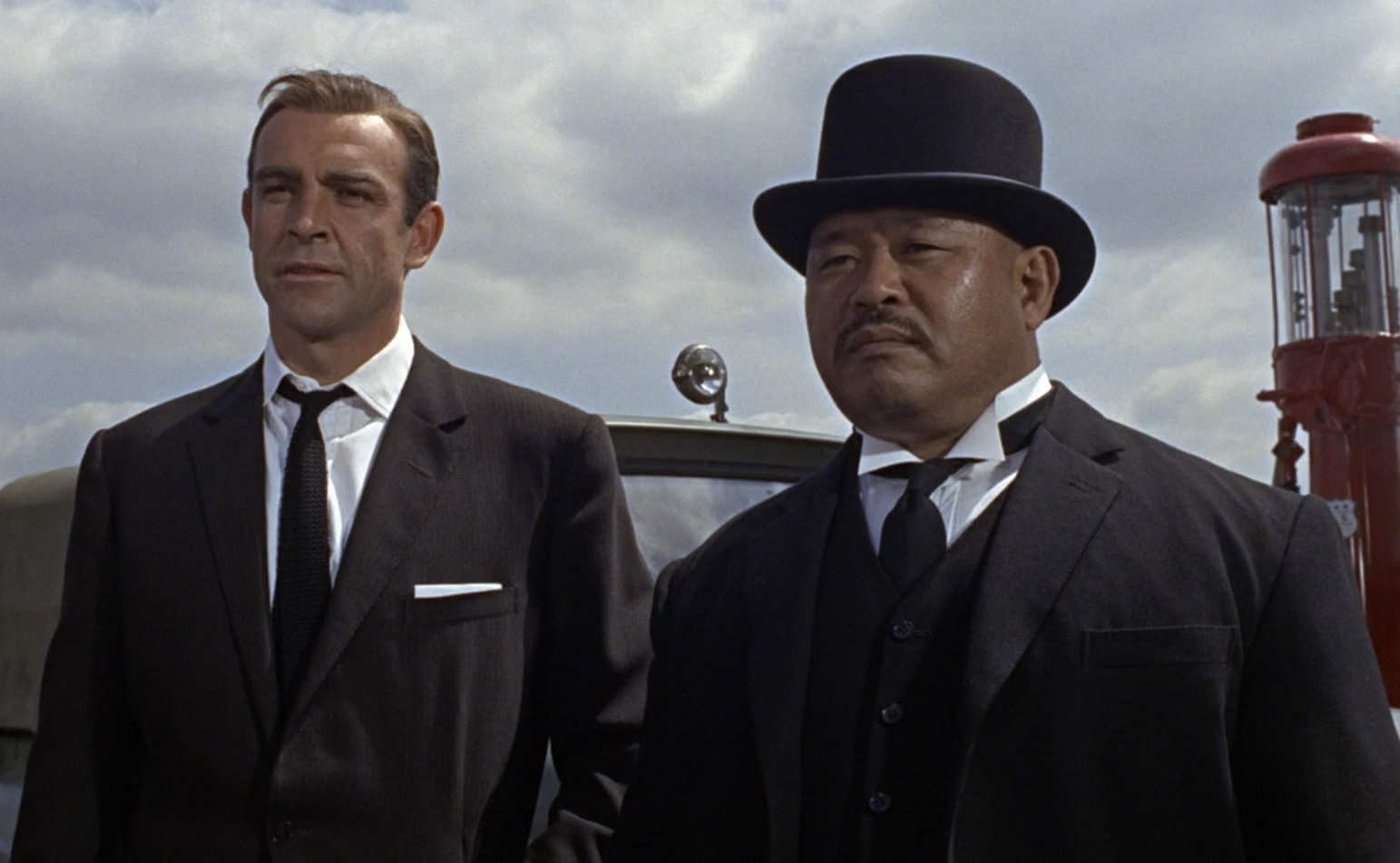
I LOVE Oddjob, my favorite James Bond villain, portrayed by Harold Sakata in GOLDFINGER. That hat, those heads … (Strangely, hours after I added Oddjob to my list, I read Richard Kiel, the actor who played “Jaws” in the James Bond movies THE SPY WHO LOVED ME and MOONRAKER, had just died. Jaws was an effective bad guy also … at least until he switched sides in MOONRAKER to help Bond.)
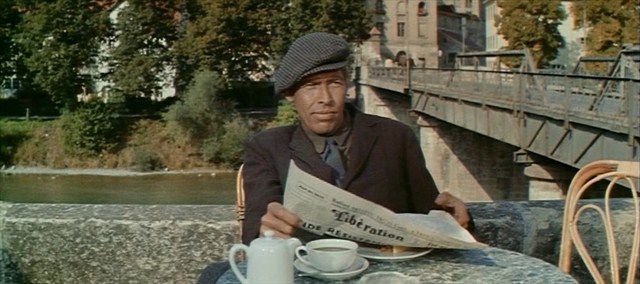
I LOVE James Coburn’s bid for freedom on a bicycle in THE GREAT ESCAPE. Australian Flight Officer Sedgwick is a secondary character in the movie, but he is “the manufacturer,” the go-to guy who can build or repurpose just about anything to help his fellow POWs escape a Nazi camp. During the mass prison break, Sedgwick snatches a bicycle to start his solo journey through the German countryside into Nazi-occupied France. THE GREAT ESCAPE is filled with the toughest, coolest, smartest men’s men of the era: Steve McQueen, James Garner, Charles Bronson, Richard Attenborough and Coburn; but though he had the least amount of screen time and lines among his co-stars, Coburn’s Sedgwick calmly and in good humor performs his tasks and waits for his opportunity, not even breaking a sweat during a close call with Nazi officers at a French cafe.
I LOVE the soundtrack for Brian De Palma’s 1978 suspense thriller THE FURY. John Williams composed the music during his 1970s peak, but the work is much different, darker, more other-worldly, than JAWS, STAR WARS, CLOSE ENCOUNTERS OF THE THIRD KIND, SUPERMAN or his other soundtracks of the period. It most resembles his score for the sadly forgotten DRACULA of the same year, the version with Frank Langella, Laurence Olivier and Donald Pleasance. Both THE FURY and DRACULA soundtracks are hard to come by: They’re out of print and will cost you a few pints of blood … though if you ask nicely I might burn copies for your late-night listening pleasure.)
I LOVE the scene in David Lynch’s THE ELEPHANT MAN in which John Merrick shows his benefactors a photograph of his mother. This is a moment of wonderful acting from three veterans … watch how characters react to the photograph and how they react to each other’s reactions. Splendid, heartbreaking. “I must have been a great disappointment to her.”
I LOVE the 1941 romantic screwball comedy THE LADY EVE. Barbara Stanwyck plays a card shark who boards an elite cruise ship with her con artist father to cheat lots of money from wealthy passengers. She sets her eyes on Henry Fonda as an easy mark … and of course falls in love with him. Stanwyck is absolutely enchanting, and Charles Coburn is a hoot as her father, a criminal with the perfect touch of brains, heart and class. “Don’t be vulgar, Jean,” he reminds her. “Let us be crooked, but never common.” Henry Fonda is the consummate foil, head over heels for Eve and smart enough to know he’ll be better off for it. I’m so ferociously critical of romantic comedies that my friends think I just don’t like “that kind of movie,” that I’m missing some sort of gene that would allow me to moon over the happiness of characters in movies. No. Rather it’s that today’s romantic comedies are creatively stillborn, unimaginative, cheap wish fulfillment fantasies for lazy sods. I actually really love romantic comedies, thanks very much, and THE LADY EVE is one of my favorites.
This is the third of a weekly column of random things I love from movies I’ve seen over the years. And tell me in the comments something you’ve never forgotten from a movie.
I LOVE Christina Ricci as Wednesday Addams in the 1991 and 1993 feature film versions of the Charles Addams New Yorker comics and the mid-1960s television sitcom. Ricci is so perfectly cast, so marvellously deadpan, as the darkly serious daughter in a family full of eccentric misfits, it’s really no wonder Hollywood has had no idea how to cast her in films since — to many, she’ll ALWAYS be Wednesday Addams (it’s the Anthony Perkins/Norman Bates Syndrome). The actress was only 11 when she first portrayed Wednesday, but she demonstrated natural talent and the camera loves her dinstinct feature … I truly hope she has a future in the movies.
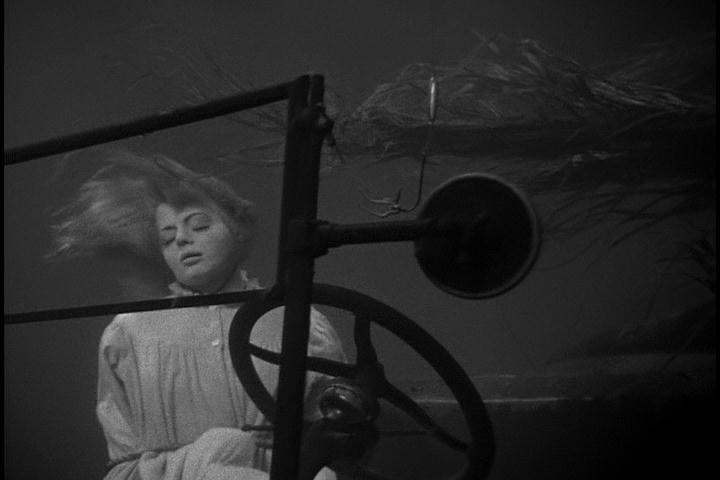
I LOVE the stunning cinematography of the 1955 movie THE NIGHT OF THE HUNTER. That this incredible film was the only one ever directed by English actor Charles Laughton is a mystery … the director’s vision is inspired and wholely unique, and he is supported by a literate script, superb actors and, most critically, gorgeous photography by camera master Stanley Cortez. Laughton and Cortez looked back to the German expressionism of the 1920s and ’30s to tell this dark fairy tale, using the same shadows, nightmarish sets and distorted arrangements that were popular in horror and noir. This is such a great movie that almost any facet of it — Robert Mitchum’s evil preacher, Shelley Winters’ widowed mother, Lillian Gish’s take-no-guff redneck, the love-hate knuckle tattoos, the menacing hymn “Leaning on the Everlasting Arms” — could make my 10 Things I Love list. But the cinematography, that is what has haunted and affected me for decades.
I LOVE Sting’s fabulously tricked-out Vespa in the 1979 feature film adaptation of The Who’s rock opera QUADROPHENIA. The film producers wanted Sting’s character, Ace Face, the “ultimate Mod”, to ride a vintage Vespa 160, but the model had been discounted years earlier and the scooter company couldn’t find enough identical bikes to satisfy the filmmakers’ continuity needs. More modern scooters were rebuilt to replicate the rare GS, which makes the tragic end of Sting’s beautiful set of wheels much more easy to bear.
I LOVE the twisted relationship in THE GRIFTERS between Lilly, Roy and Myra, a trio of con artists who scam, cheat and deceive their way into the mother of all Greek tragedies. Anjelica Huston, John Cusack and Annette Bening are aces in this 1990 crime drama. It breaks my heart that this movie is all but forgotten today; it’s ripe for rediscovery … and just try to predict the outcome of this con game, based on a hard-boiled novel by tough guy Jim Thompson.
I LOVE that California new wave/ska/rock band Oingo Boingo starred in the movie FORBIDDEN ZONE one year before the release of their first album, ONLY A LAD. And if you’re familiar with Oingo Boingo, you’ll guess that this is one crazy frigging movie. What do you expect? — Hervé Villechaize, Tattoo from FANTASY ISLAND, is also in it, as is Susan Tyrell, the oddball actress from Andy Warhol’s circle. Boingo’s lead singer, Danny Elfman, is now one of the most sought-after film composers in Hollywood. This is his first score. Of course, mainstream audiences found the movie offensive, but it has since become a midnight cult favorite.
I LOVE the fantastic opening scene of Orson Welles’ TOUCH OF EVIL. For three-and-a-half minutes the camera tracks both a car with a ticking bomb and a couple walking through the streets of Tijuana. There is no trickery and no film edits. The camera glides over rooftops, around corners, alongside moving cars and pedestrians, all while staying in perfect step with Henry Mancini’s hip jazzy score. This is the kind of filmmaking that invigorates my love affair with the silver screen.
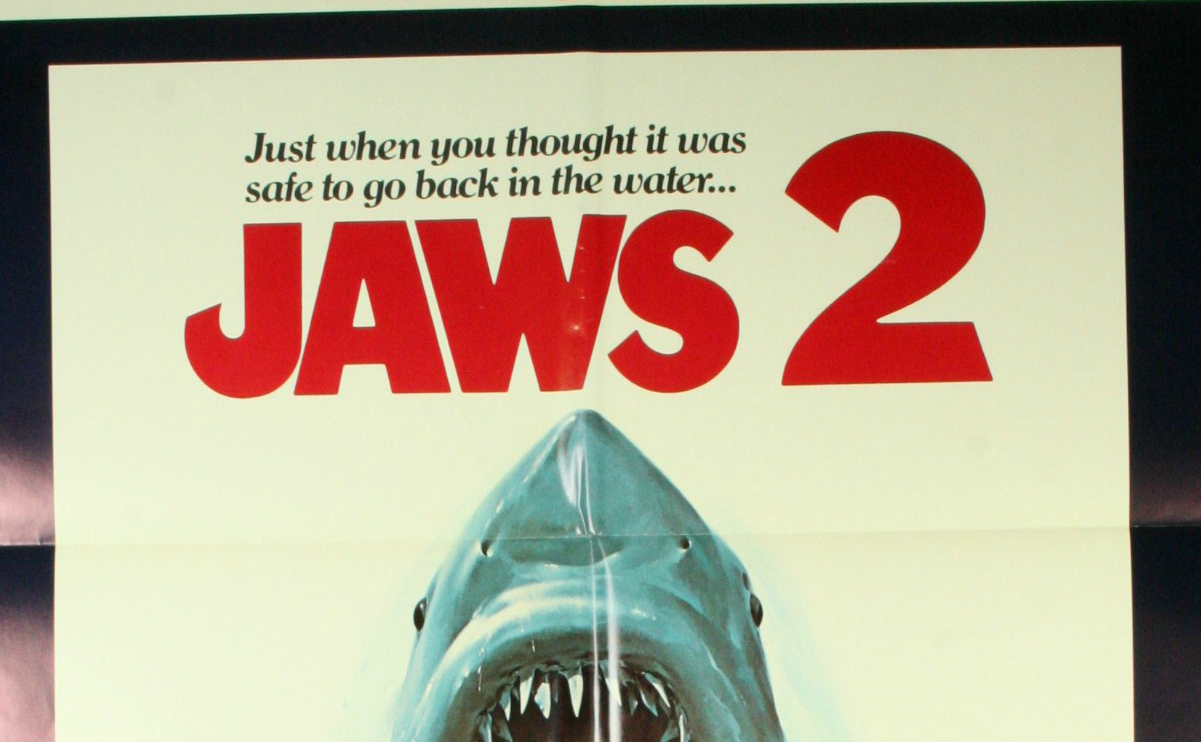
I LOVE that the best thing about JAWS 2 is a 13-word tagline … one still used by people who weren’t even born yet in 1978.
I LOVE Bernard Herrmann’s woozy score for Hitchcock’s VERTIGO.
I LOVE Edward Norton’s incredible film debut in the 1996 courtroom drama PRIMAL FEAR. Norton introduces himself with a powerful performance that will leave you guessing until the end, and he has certainly made good on this calling card. The last two movies I’ve seen him in have both been directed by Wes Anderson — MOONRISE KINGDOM and THE GRAND BUDAPEST HOTEL — and Norton has thrived in that director’s rarefied world. In this PRIMAL FEAR clip, Norton manages to hold attention in the company of some terrific co-stars, including my favorite, Laura Linney, and Frances McDormand, Alfre Woodard and Richard Gere.
I LOVE BEAUTY AND THE BEAST. Not the Disney animated musical. I’ve never seen that version. I’m talking about the breathtaking 1946 French version, LA BELLE ET LA BÊTE. This was directed by Jean Cocteau, a hypnotic, romantic, visually enchanting masterpiece — yes, I’ll say it: One of the greatest motion pictures ever made. It’s one of the few I watch annually, a movie that always delights, always entertains, always restores a bit of childlike wonder.














 The Most Beautiful Fraud